Why Women Are 46% of Entry-Level Workers but Just 23% of the C-Suite
The World Economic Forum found women make up 46% of entry-level workers but just 23% of C-suite roles. Structural barriers, not supply, explain the gap.
Women enter the global workforce in near-equal numbers to men, making up 46% of entry-level positions. Yet they represent just 23% of executives in the C-suite and 19% of chief executive officers, according to the World Economic Forum’s Global Gender Gap Report 2026. This phenomenon—called the “drop to the top”—reveals not a shortage of qualified women but systemic obstacles that compound as careers advance.
The report, the 20th in an annual series tracking gender gaps across 145 economies, comes as women’s share of new C-suite hires has declined for a fourth consecutive year, according to LinkedIn data cited in the report. Understanding what the WEF found about the causes and what policies it points to matters because these barriers shape not just individual careers but economies’ ability to use talent. Closing the global gender gap in economic participation and opportunity would require 129 years at the current pace, the report warns—yet educational gender parity will arrive in just eight years.
Industry variations reveal the pattern
The drop to the top is not uniform. In healthcare and care services, women make up 59.9% of the workforce. In education, 54.2%. In consumer services, 51.7%. In government and public sector, 50.6%. Yet in infrastructure, women hold just 23.6% of positions, and in oil, gas, and mining, 25.2%.
But the crucial gap is not entry-level representation—it is the leap from junior roles to executive ones. In technology, construction, and transport, the drop is sharper: women’s share more than halves. Women make up 27% of chief financial officers, 24% of chief operating officers, and when they reach the C-suite, they concentrate in specific roles: 65% of chief people officer positions, 64% of chief human resources roles, and 45% of chief marketing officer positions.
The distribution matters because some roles have more operating responsibility and clearer paths to the top job. Routes to CEO remain anchored in finance and operations, where women hold less than one-third of positions.
Women’s presence across sectors
Women comprise 59.9% of the workforce in healthcare and care services, 54.2% in education, and 51.7% in consumer services, but only 23.6% in infrastructure and 25.2% in oil, gas and mining, according to the WEF Global Gender Gap Report 2026.
Parenting penalties compound across a career
One of the WEF report’s sharpest findings concerns parenting. Among experienced, non-managerial employees, men who take a full-time parenting break are 44% more likely than women to be promoted in their first year back. Three years later, men remain about 39% more likely to have progressed.
Women bear more unpaid care work responsibility. The report documents that women are almost twice as likely as men to take career breaks, with full-time parenting breaks far more common among women than men and followed by persistent gaps in career progression after they return.
Education gains have outpaced economic gains
The report’s data on women’s education underscores what is being left on the table. Gender parity in education will arrive in eight years, far sooner than the 129 years still needed for economic parity. Yet this educational advantage has not translated into comparable economic outcomes. The report notes that “women’s dramatic gains in education and qualifications have not translated into comparable gains in economic outcomes, earnings or leadership positions.”
Men who take parenting breaks are 44% more likely than women to be promoted in their first year back—a penalty that compounds across a career.
Policy levers the report identifies
The WEF report does not propose new policies but identifies which ones have historically driven progress and which ones must accelerate. Ninety-six percent of World Bank-examined legal reforms expanded women’s rights, the report notes, suggesting that legal and policy change is a proven pathway. The report cites three areas for action: restoring momentum in senior leadership by reversing four years of declining women’s advancement, preventing the emerging AI economy from repeating historical gender imbalances in decision-making positions, and leveraging women’s increasing share of accumulated wealth.
More broadly, the report groups solutions into categories: policy reforms and workplace improvements, advocacy and civil society action, and shifts in investment and capital allocation. The report emphasizes measurement and visibility, noting that objective data “creates visibility, enables comparison, identifies where progress is taking place and helps leaders understand where greater action is needed.”
Saadia Zahidi, the WEF’s managing director, has said gender parity is achievable and that governments and employers need to apply the policies that work more quickly.
Why progress has stalled
The 2026 report marks two decades of measurement. In 2006, when the WEF first tracked the global gender gap, the world was further from parity. Two decades of work have produced gains in some areas: women’s workforce participation rose from 39.9% in 2015 to a peak of 42% in 2025. But progress toward gender parity in leadership has stopped. For four consecutive years, women’s share of new C-suite hires declined.
Women’s overall workforce participation dipped slightly, from 42% in 2025 to 41.8% by June 2026, a reminder that progress is not automatic or irreversible. What was built can be undone.
The report’s framing is significant: these gaps reflect structural barriers, not individual choice or capability. Closing them requires institutional change, not exhortations to women to lean in. Without such changes, the WEF estimates, closing the global gender gap entirely would take about 120 years at the current pace—and closing the economic participation gap specifically would take 129 years—far longer than the eight years needed to close the educational gap that already exists.
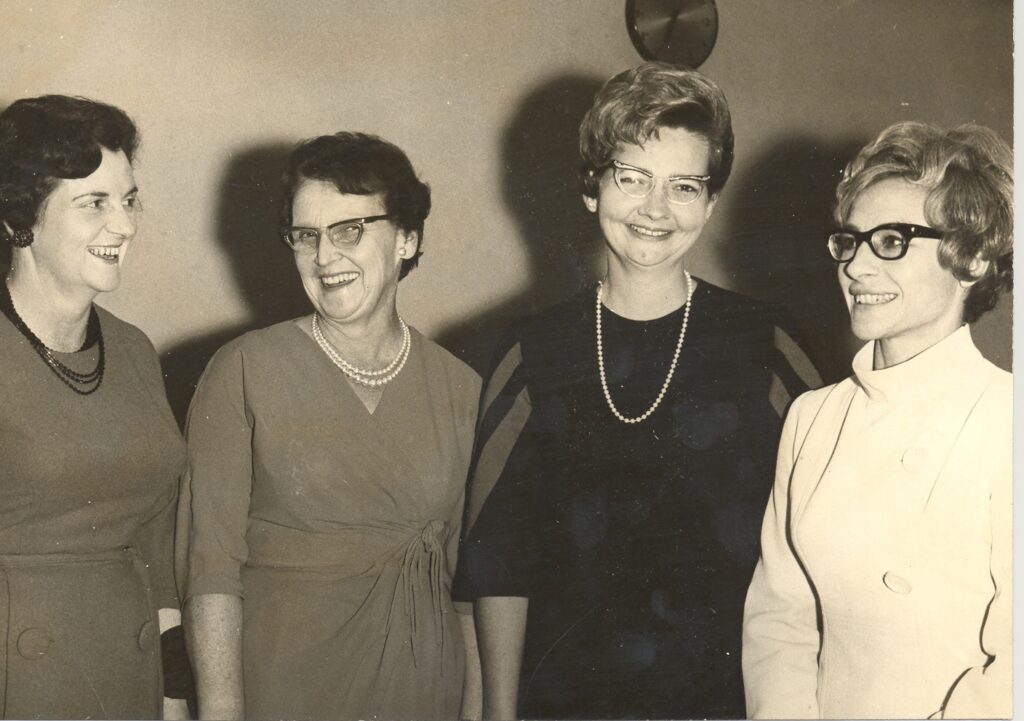
Photo: Courtesy of Horowhenua Historical Society inc, Levin, New Zealand · CC BY-SA 3.0 · via Wikimedia Commons