

EEOC’s April 2024 rule spells out which pregnancy accommodations employers must provide
Key takeaways
- Employers must grant accommodations for known pregnancy-related conditions unless doing so creates significant difficulty or expense
- Four accommodations—water breaks, restroom breaks, sitting/standing flexibility, and meal breaks—are presumed reasonable in virtually all cases
- Workers must file EEOC charges within 180 days of a violation and can recover damages if the employer violated their rights
The Pregnant Workers Fairness Act, signed into law on December 29, 2022, went into effect on June 27, 2023. The law requires employers with 15 or more employees to make job changes for workers dealing with pregnancy, childbirth, or related conditions—unless making those changes creates significant difficulty or expense. When Congress gave the EEOC a December 2023 deadline to issue detailed rules, the agency released its final regulation on April 15, 2024, with an effective date of June 18, 2024. That rule specifies which accommodations employers must assume are reasonable and sets out the process for requesting them.
The accommodation requirement applies to any physical or mental condition related to pregnancy, including miscarriage, gestational diabetes, morning sickness, sciatica, and recovery from childbirth. A worker does not need a medical diagnosis or a doctor’s note to request an accommodation. She simply has to communicate to her employer a known limitation—a pregnancy-related physical or mental condition—and discuss what she needs to continue working. The law does not require a particular form of communication; an email to a manager, a conversation with HR, or a handwritten note all suffice.
What Accommodations Are Required
The EEOC’s final rule identifies eleven categories of accommodations that employers may need to provide. They include frequent breaks; sitting or standing as needed; schedule changes, part-time work, and paid or unpaid leave; telework; parking; light duty; making existing facilities accessible or modifying the work environment; job restructuring; temporary suspension of one or more essential job functions; acquiring or modifying equipment, uniforms, or devices; and adjusting or modifying examinations or policies. The rule defines a reasonable accommodation broadly as a change in the work environment or how things are usually done.
The EEOC identified four accommodations as “predictable assessments”—changes that will, in virtually all cases, be found reasonable and not impose undue hardship on the employer. These are: permitting employees to carry water and drink as needed, allowing additional restroom breaks, enabling workers to change positions between sitting and standing, and permitting breaks for eating and drinking. When a worker requests one of these four accommodations, employers should grant it without extensive deliberation.
Employers must engage in an interactive process with the employee to discuss the limitation and identify solutions together. The employer should respond promptly to accommodation requests. Many accommodations can be granted through simple exchanges—a brief conversation or email—without formal medical documentation. Employers cannot require medical examinations by employer-selected doctors; documentation requests must be reasonable and unnecessary when the limitation is obvious or already known.
Key Dates for the PWFA
The Pregnant Workers Fairness Act was signed into law on December 29, 2022, took effect on June 27, 2023, and the EEOC’s final implementing rule became effective on June 18, 2024. The EEOC began accepting discrimination charges on June 27, 2023.
How the Law Defines a Known Limitation
A “known limitation” is a physical or mental condition related to, affected by, or arising out of pregnancy, childbirth, or related medical conditions that an employee has communicated to the employer. Critically, it does not require a formal diagnosis. If a pregnant worker tells her supervisor, “I’m having trouble getting to work at my scheduled starting time because of morning sickness,” that is a known limitation.
The law is broad in what counts as a pregnancy-related condition. It includes obvious problems like gestational diabetes and pregnancy-induced hypertension, but also swollen ankles, back injuries, and miscarriage. A condition need not be serious or long-lasting. The EEOC’s rule clarifies that physical or mental conditions can be “modest or minor” and still trigger accommodation obligations if they relate to maintaining the worker’s health, the health of the pregnancy, or seeking health care connected to pregnancy or childbirth.
Workers need not request accommodations in any particular way or use formal language. An email to a manager, a conversation with HR, a note, or even an indirect statement counts. The law focuses on whether the employer knew of the limitation, not the form in which the employee communicated it.
When Employers Can Refuse an Accommodation
An employer can deny an accommodation only if it would impose “undue hardship” on the operation of the business. The law borrows the undue hardship standard from the Americans with Disabilities Act, which the EEOC describes as “significant difficulty or expense” for the operation of the business. Undue hardship does not mean the accommodation is merely inconvenient or more expensive than alternatives.
When evaluating undue hardship, employers must consider several factors: the duration of the employee’s inability to perform essential job functions, the availability of alternative workers or temporary staffing options, whether the functions can be postponed or reallocated, and any precedent of the employer providing similar accommodations to others. This last factor is significant—if an employer has previously granted a similar accommodation, claiming undue hardship for the same accommodation becomes difficult to justify.
The law also prohibits employers from unnecessarily delaying accommodations, denying employment based on accommodation needs, forcing unwanted accommodations on workers, or mandating leave when other accommodations could allow the employee to keep working. Before determining that undue hardship exists, employers should engage in the interactive process to identify possible alternatives and document their good-faith efforts.
Timeline: How the Law Came Into Effect
The Pregnant Workers Fairness Act became law on December 29, 2022. Six months later, on June 27, 2023, the law took effect, and the EEOC began accepting discrimination charges from workers alleging violations. Employers, however, had to wait for detailed guidance on their specific obligations.
Congress directed the EEOC to issue implementing regulations by December 29, 2023, with examples of reasonable accommodations. The agency issued its final rule on April 15, 2024, and it was published in the Federal Register on April 19, 2024. The rule became effective on June 18, 2024. This nearly year-long gap between the law’s effective date and the final rule’s effective date created a period of uncertainty for employers and workers, though EEOC guidance issued before the final rule helped clarify expectations.
An employer can deny an accommodation only if it would impose undue hardship—significant difficulty or expense for the operation of the business, not merely because the change is inconvenient or costly.
How Workers Enforce Their Rights
Workers can file discrimination charges with the EEOC if an employer denies an accommodation, retaliates for requesting one, or violates the law in any other way. The deadline to file is 180 days from the date of the violation, or 300 days if a state or local anti-discrimination law also covers the claim. Federal employees must contact their agency’s Equal Employment Opportunity counselor within 45 days. Charges can be filed online at publicportal.eeoc.gov or in person at a local EEOC office; workers can call 1-866-408-8075 to find their nearest office.
Workers should document accommodation requests and keep copies of related emails, letters, or other records of the employer’s responses. Employers cannot require documentation beyond what is reasonable, and they cannot require medical examinations by doctors of the employer’s choosing. If the EEOC finds a violation, it can pursue a settlement or sue the employer on the worker’s behalf. Workers can also sue directly for damages.
Damages may be limited if the employer made a good-faith effort to provide a reasonable accommodation for a known limitation. Workers may be able to recover damages using the same remedies available under Title VII of the Civil Rights Act of 1964.
Ongoing Legal Challenges
Since its enactment, the PWFA has faced constitutional and enforcement challenges. Texas challenged the constitutionality of the statute itself, and other employers have raised similar arguments. In February 2024, a federal judge ruled that the EEOC could not enforce the PWFA against the State of Texas, which affects the ability of Texas state employees to enforce their rights under the law. A federal judge also blocked EEOC enforcement of certain provisions—those requiring accommodations for abortion- and infertility-related conditions—against members of the Catholic Benefits Association, which includes thousands of employers. These rulings narrowed PWFA enforcement in specific jurisdictions and contexts, though the broader law remains in effect across most of the country.
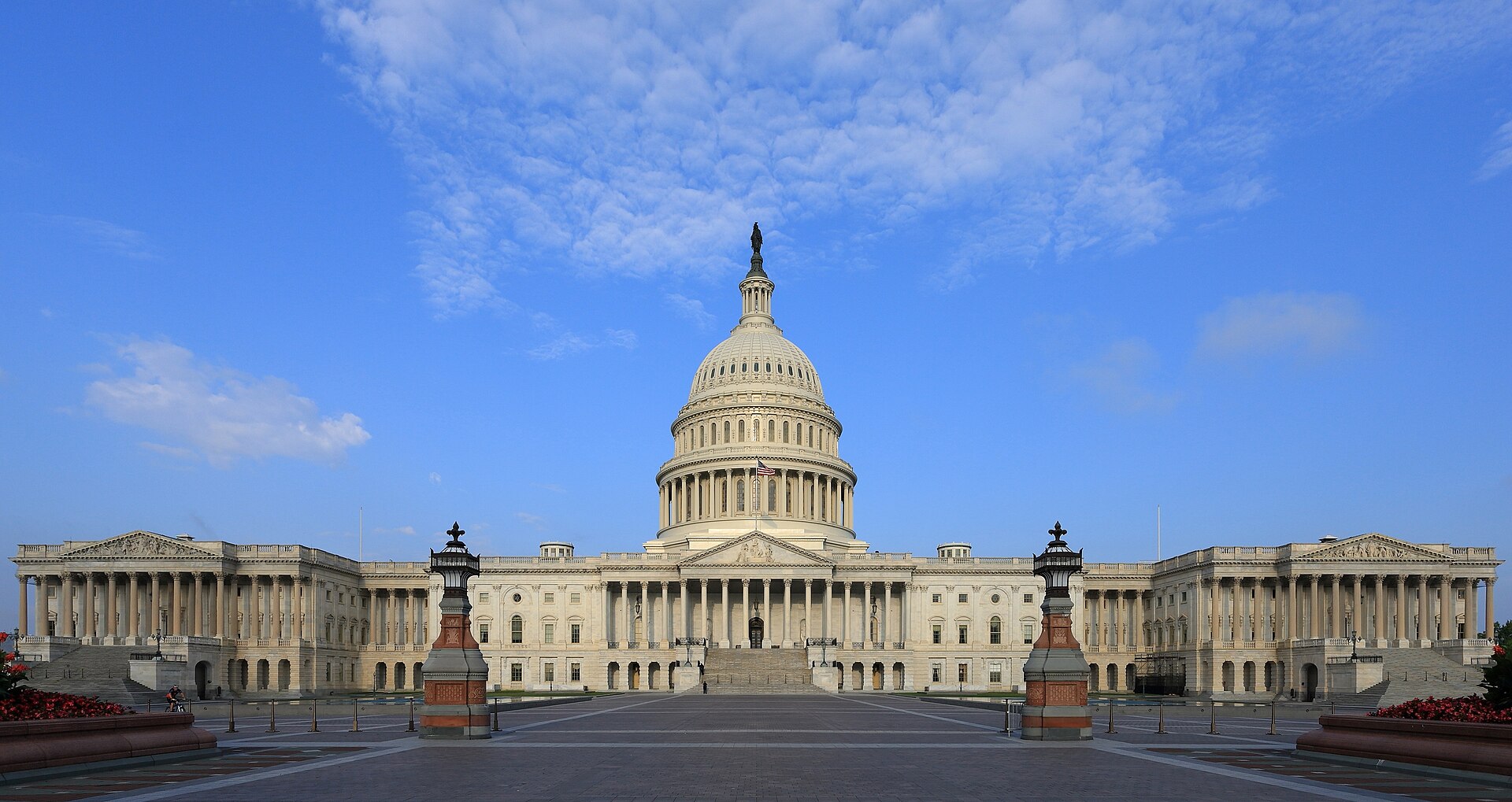
Photo: Martin Falbisoner · CC BY-SA 3.0 · via Wikimedia Commons