


World’s biggest Muslim country sinks into turmoil: What to know
Hundreds of students marched through major Indonesian cities on Monday, defying warnings of a crackdown after a weekend of deadly unrest left eight people dead in the country’s worst violence in more than two decades.
The demonstrations, which began last week over lawmakers’ spending privileges, have evolved into a broader challenge to President Prabowo Subianto, who has been in office less than a year.
Newsweek has reached out to the Indonesian Foreign Ministry for comment.
Why It Matters
The unrest highlights deep dissatisfaction with Indonesia’s political establishment, police conduct, and government spending priorities. It is also significant for the world’s largest Muslim-majority nation, where political stability is seen as vital for regional security and economic growth.
The crisis marks the most serious challenge yet for Subianto, whose leadership is under scrutiny as protests expand across the Southeast Asian archipelago and capture international attention.
Achmad Ibrahim/AP Photo
What To Know
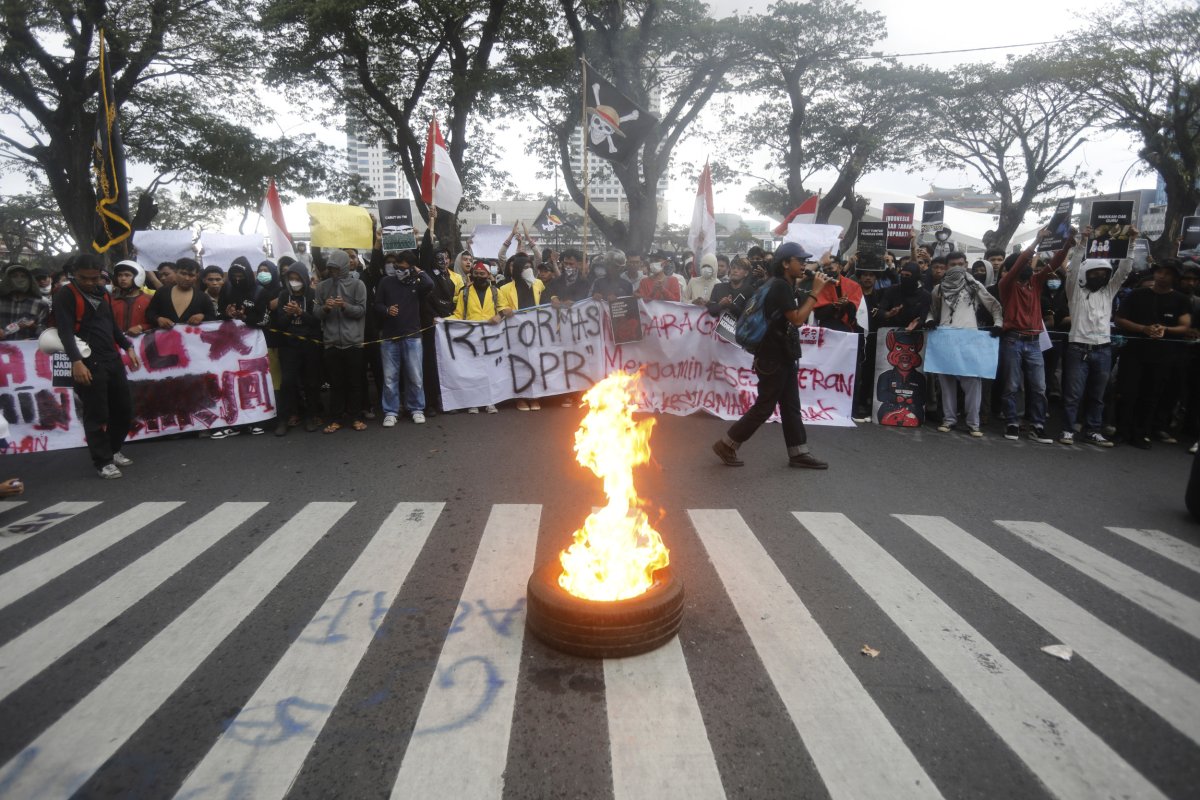
Student groups staged demonstrations in Jakarta, Yogyakarta, Bandung, and Makassar, despite heavy military patrols and police checkpoints. In Makassar, students gathered near the local parliament, which was set on fire during last week’s unrest.
Army convoys moved through Jakarta’s main arteries as schools shifted classes online and businesses told employees to work from home. Police confirmed that more than 1,200 people had been detained nationwide and over 700 injured, with the governor estimating $3.4 million in damage.
Violence Escalates
The demonstrations first erupted over government perks for lawmakers but spiraled after a police vehicle fatally struck a motorcycle taxi driver. That incident unleashed rioting and looting, with the homes of political leaders—including that of the finance minister—attacked and government offices burned.
In Bandung, protesters lit tires on fire, while in Ternate, police used teargas to stop crowds storming parliament buildings. Officials said at least four deaths over the weekend came from mob violence and arson in Makassar.
Binsar Bakkara/AP Photo
Balancing Act
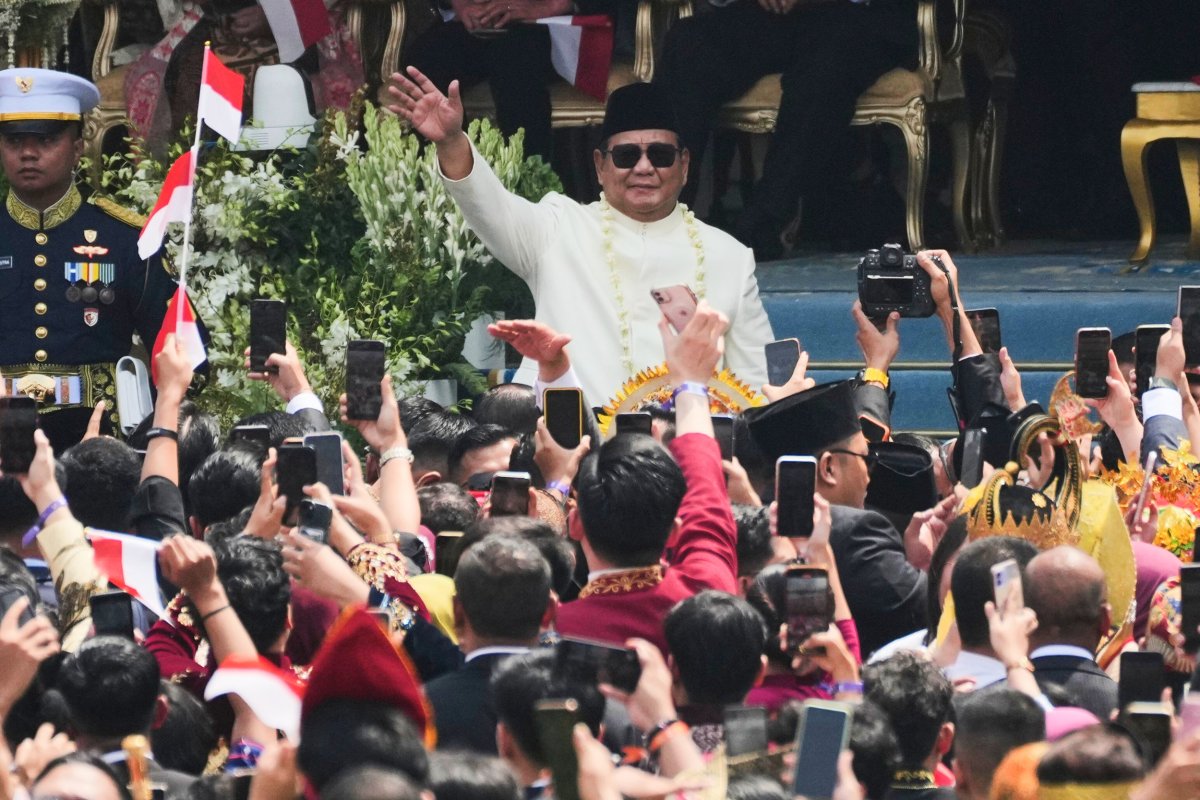
On Sunday, Subianto announced cuts to lawmakers’ benefits in an effort to ease tensions. At the same time, he praised the security forces and promoted 40 injured officers, saying the police had also made sacrifices.
On Monday, he visited injured police at a Jakarta hospital, where he criticized demonstrators and stressed legal limits on rallies.
“The law states that if you want to demonstrate, you must ask for permission, and permission must be granted, and it must end at 6:00 pm,” he said.
The double message appeared to be part of a strategy to limit concessions while promising firmer control to maintain order.
Civil Society and Student Demands
While students pressed ahead, several civil groups postponed demonstrations in Jakarta. The Alliance of Indonesian Women announced delays to prevent escalation, while an umbrella student union described conditions for safe protest as “very impossible.”
Leaders expressed concern that mass arrests and intimidation could weaken momentum, even as anger deepens over systemic corruption and inequality.
Student leaders also stressed that concessions on perks do not address their broader calls for accountability and comprehensive police reform, arguing the protests are not only about financial privileges but also about restoring public trust in institutions shaken by violence and decades of uneven governance.
Achmad Ibrahim/AP Photo
What People Are Saying
President Prabowo Subianto of Indonesia: “There might be police members who were wrong…But don’t forget dozens of officers who sacrificed themselves.”
Syamry, leader of a student group at Makassar State University: “The President’s statement yesterday did not accommodate demands from students and civil society.”
Guo Jiakun, Foreign Ministry spokesperson of China, Indonesia’s largest trading partner “We noted the latest developments in Indonesia and believe that under the leadership of President Prabowo Subianto, the Indonesian government has the ability to properly handle the domestic situation.”
What Happens Next
The government faces mounting pressure to implement further reforms while keeping order. With protests continuing despite security crackdowns, Subianto’s ability to balance concessions and control will define his presidency’s first major test and shape Indonesia’s role as a stabilizing force in the wider region.
