


Mom told twins may not survive and asked to choose just one—she refused
A pregnant mom was devastated to discover that her unborn twins had a life-threatening condition, leaving her with the decision of whether to save just one, or hope they could both survive.
Jenna Hutchison, 33, was overjoyed when she found out she was expecting again in 2024 and that her son Hugo would get a younger sibling. Things only got better when a six-week scan revealed that she and her husband, Chris, were having twins.
Hutchison, of Queensland, Australia, told Newsweek that she felt as if she had “won the lottery” and couldn’t wait to welcome the identical twin girls.
Unfortunately, everything changed at 16 weeks when a scan revealed that the girls had Twin to Twin Transfusion Syndrome (TTTS). This involves imbalanced blood flow, which can deprive the donor twin of the nutrients, while providing an excess of nutrients to the recipient twin.
The donor twin has less blood volume, which can lead to slower growth and decreased amniotic fluid volume. Meanwhile, the recipient twin receives too much blood volume from the placenta, putting a strain on the heart. The Cleveland Clinic suggests that TTTS is prevalent in around 15 percent of identical twin pregnancies.
Hutchison said: “The pregnancy was classified as high risk, and I had to have weekly scans to check on the twins’ fluid and development. I felt extremely anxious and scared, but I kept my faith in the girls and tried to stay as positive as possible.”
The condition got progressively worse as Hutchison’s pregnancy went on.
By 22 weeks, doctors attempted surgery known as fetoscopic laser photocoagulation. The procedure aims to locate and seal the abnormal blood vessels on the placenta and to stop the progression of TTTS.
The surgery was a terrifying prospect for Hutchison, but what transpired was even worse.
When Hutchison woke up, the surgeon informed her and Chris that they couldn’t perform the surgery due to complications with the placenta that would have risked the lives of both twins. They were, however, successful in draining 2.7 liters of fluid from her womb, helping to ease Hutchison’s discomfort.
Making a Lifechanging Decision
As a result of the failed surgery, the couple were faced with a devastating decision—whether to save the life of the stronger twin or hope they both pulled through.
“They told us that Lily had a significant amount of fluid surrounding her in the womb, and Ivy had barely any,” Hutchison said. “They told us that Lily had a better chance of survival being the recipient twin. They gave us the option to save Lily and end life for Ivy.”
Stillbirth and disability, including permanent brain damage, were among the possible outcomes.
“We were strong in our decision that the girls came into existence together for a reason and we would not play God with their lives. I had been sent a few signs from the universe that the girls would make it,” Hutchison continued.
She trusted her maternal instincts and decided to leave the TTTS untreated. She and her husband already loved both girls, and they couldn’t imagine choosing one over the other.
Shortly after, Hutchison went into labor on December 2. Lily Belle and Ivy Grace were born via emergency Caesarean at 24 weeks, each weighing just 458 grams. It was remarkable that they weighed the exact same, leaving their medical teams stunned.
Due to their size and weight, the twins were categorized as micro-preemies.
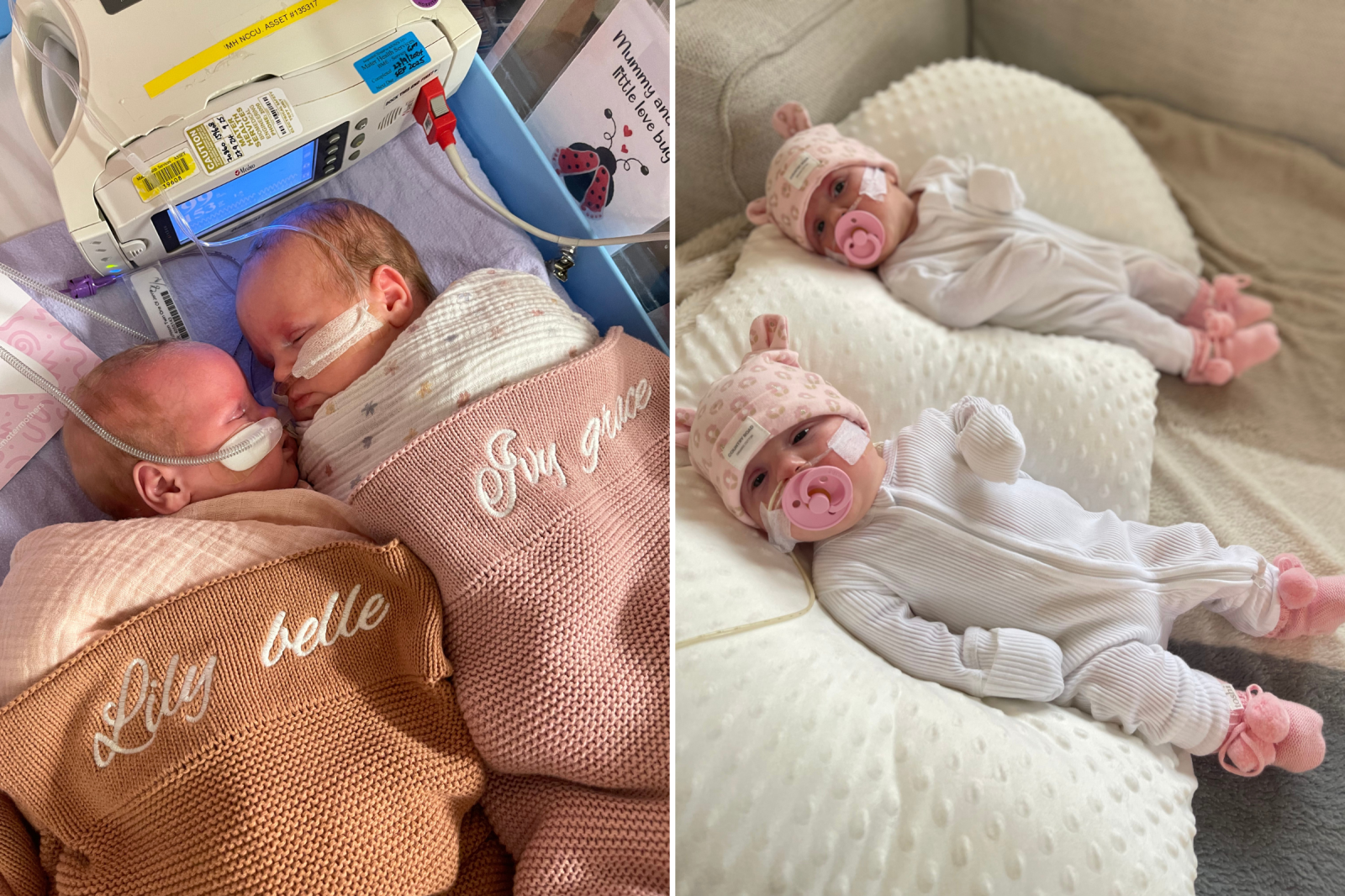
Hutchison told Newsweek: “I felt like I was looking at little aliens. Their skin was see-through, I could see their veins, and they didn’t really look like babies. I thought it was near-impossible to save them because they were so tiny.”
The twins were both intubated in the NICU, and they also required intravenous fluids and tube feeding, while Lily had two rounds of steroids to help her lungs. Through it all, Hutchison was pumping breast milk around the clock to ensure her girls got the nutrients they desperately needed.
After around three months, the twins were stronger and started to hit more milestones. They both suffered brain bleeds (Ivy’s brain bleed is a grade 4, putting her at risk of cerebral palsy), eye disease, neonatal lung disease and are both on home oxygen. Lily also had to be resuscitated in the NICU after turning blue.
It was gut-wrenching time for the family, but they celebrated every ounce of progress. After 107 days in the NICU, Ivy was able to go home on March 19. It took a bit longer for Lily’s day to come, but she was finally home on April 10, following 129 days in NICU.
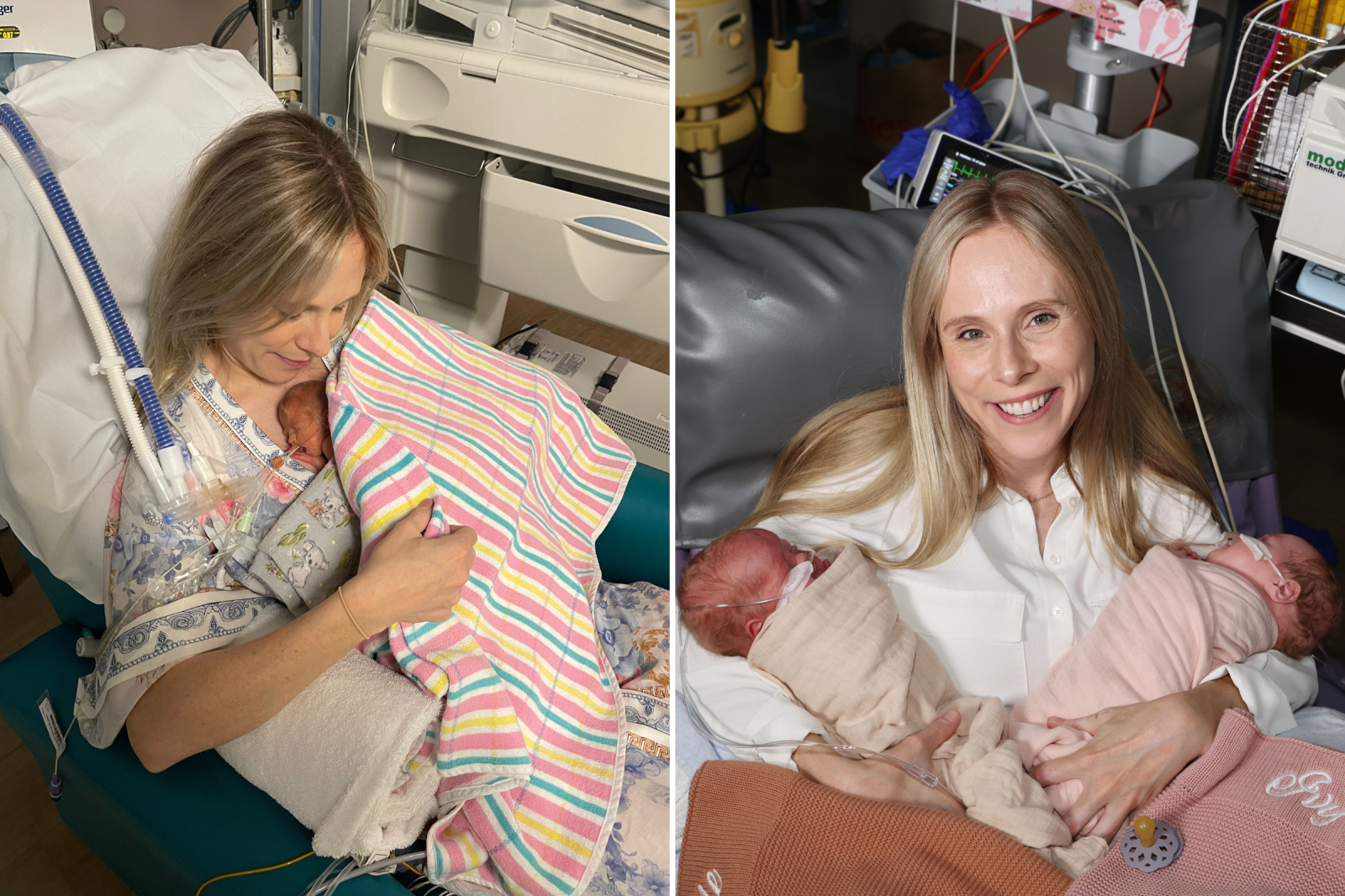
“I’m happy to report the girls are now thriving,” Hutchison said. “They’re both 7 kilograms [15 pounds] and are rolling, trying to crawl and laughing. They are starting to eat solids, and, although Lily is still fed via a tube into her belly, she does eat a little bit via her mouth.”
Connecting With Other NICU Parents
From the overriding joy of learning that she was pregnant, to watching doctors resuscitate her premature baby, Hutchison has been on an overwhelming journey. She went through the most testing of challenges, but she never lost faith in her daughters.
Hutchison has used social media to document the experience (@jennahutchie), raise awareness for TTTS, and above all else, to help other moms. There were so many times Hutchison felt alone, but her message to other parents is to never give up.
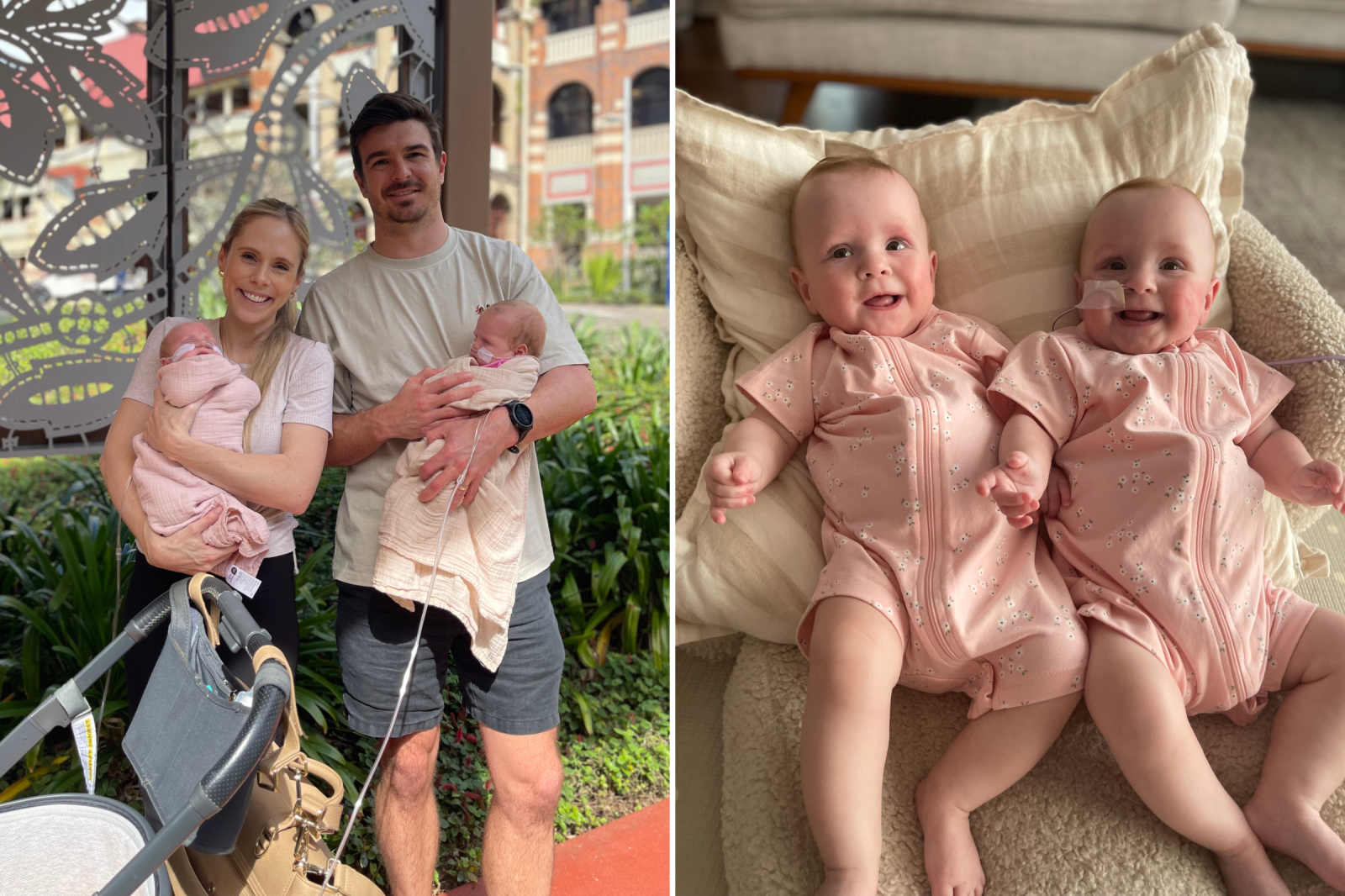
Hutchison said: “I want moms to feel less alone and to know that the NICU stage will end eventually, and you will experience joy. Everyone asks how the babies are, but nobody asks how the mom is. Pumping milk is one of the most-grueling jobs on Earth, especially when your baby is in a hospital cot and you’re alone.
“Although the NICU experience was the hardest thing, I have met the most-special humans through that. To all NICU nurses and neonatologists and the team at the Queensland Children’s Hospital, a million thank-yous would never be enough for saving our girls.”
Is there a health issue that’s worrying you? Let us know via health@newsweek.com. We can ask experts for advice, and your story could be featured on Newsweek.
