

How Advocates Are Pushing Congress to Fund Women’s Health Research
Key takeaways
- Women’s Health Advocates asked Congress for $330 million combined in new NIH and Pentagon research funding.
- The group also wants Medicare and FDA rules changed so procedures and devices for women get equal treatment.
- A stopgap funding law signed September 2 leaves the outcome undecided until December 11.
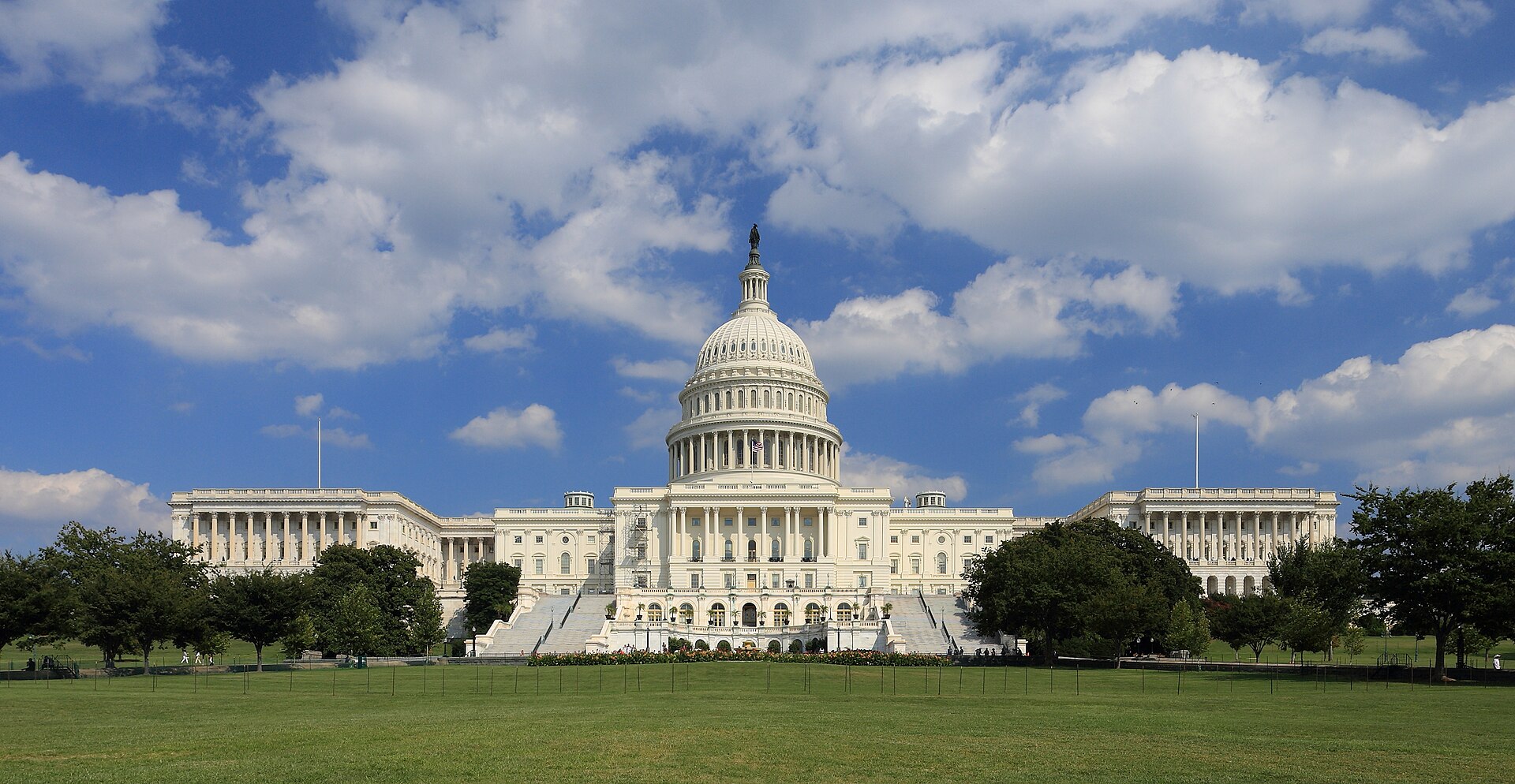
On May 21, 2026, more than 100 executives and advocates gathered on Capitol Hill for the second annual Women’s Health Capitol Hill Day, meeting with members of Congress to press seven specific funding and policy requests tied to women’s health research. The event was organized by Women’s Health Advocates, a bipartisan coalition founded in February 2025 and led by lobbyist Liz Powell, with lobbying and grassroots organizing activities led by G2G Consulting, according to the coalition’s website.
None of the group’s requests has been resolved. President Trump signed a short-term funding law on September 2 that holds federal spending at current levels through December 11, leaving decisions on the National Institutes of Health and other agencies the coalition is lobbying open until then.
A Coalition Built in Little More Than a Year
Women’s Health Advocates describes its mission as uniting people to educate government decision-makers on the policies and funding needed to advance women’s health. The group operates as an advocacy coalition rather than a registered nonprofit, combining professional lobbying with grassroots organizing, and it keeps a steering committee open to advocates who want to help set its agenda, according to its website.
Its first Capitol Hill Day, in May 2025, brought about 100 advocates from more than 15 states to Washington for roughly 25 meetings with congressional offices, the group’s website says. At the follow-up event a year later, more than 100 advocates met with about a dozen bipartisan lawmakers, including Representatives Yassamin Ansari of Arizona, Grace Meng of New York, Kelly Morrison of Minnesota and Debbie Dingell of Michigan.
Powell described the coalition’s expansion as “growing like wildfire” in comments to the trade publication FierceHealthcare, pointing to rising participation from advocates around the country.
The Device Gap
The FDA has granted 251 breakthrough device designations to cardiovascular technology, compared with five for obstetrics-related devices, according to figures cited by a former FDA official at the Women’s Health Advocates event.
Making the Case for More Research Money
The coalition’s central argument is that federal research spending does not match how women get sick, age or respond to treatment. Women’s health research has historically received less than 10% of the entire NIH budget, according to Claire Gill, founder of the National Menopause Foundation and CEO of the National Osteoporosis Foundation.
The group also points to more than $2 billion in NIH funding cuts under the Trump administration that it says have disproportionately affected women’s health research. To illustrate the stakes, it cites figures showing women make up 51% of the U.S. population and spend more of their lives in poorer health than men, that two-thirds of Alzheimer’s patients are women, and that adverse drug events occur roughly twice as often in women as in men across 19 of 20 FDA adverse-event reporting categories.
The gap has roots that predate the current funding fight. The FDA excluded women of childbearing potential from clinical research studies from 1977 until the policy was reversed roughly two decades later, and Congress mandated in 1993, through the NIH Revitalization Act, that NIH-funded studies include more women and people of color. Participation by people of color has not increased significantly since then, according to Perelel, a women’s health company that has separately pledged $10 million toward research funding.
Seven Specific Requests
The coalition asked Congress for four discrete funding lines and three policy changes at its May event. On funding, it requested $200 million for an interdisciplinary women’s health research fund spread across multiple NIH institutes, $115 million for the NIH’s Office of Research on Women’s Health, $5 million for the NIH’s Menopause Research Into Action Network, and $10 million for Women Warfighter Health & Readiness research at the Department of Defense.
On policy, the group backed the Find It Early Act, which would require insurers to cover early breast cancer screening without a copay; a change it calls “CMS Reimbursement Parity” to how CMS reimburses certain procedures; and an FDA “Women’s Health Innovation Pilot” meant to speed regulatory review for products aimed at conditions affecting women.
Women make up 51% of the population, spend more of their lives in poorer health than men, and have long received less than a tenth of NIH’s research budget.
Reimbursement and Regulatory Gaps
Behind the reimbursement request is data the coalition cites showing that CMS and other payers reimburse some procedures at higher rates when performed on male patients than on female patients for comparable work, which the group argues discourages investment in women’s health specialties.
On the regulatory side, Nada Hanafi, a former FDA official who spoke at the event, pointed to a gap in FDA breakthrough device designations, which fast-track promising medical technology: 251 have gone to cardiovascular products, compared with five for obstetrics-related devices. The coalition separately notes that up to half of women have dense breast tissue, which can reduce the effectiveness of standard mammograms, as its rationale for the Find It Early Act’s screening coverage. Hanafi also cited data showing Black women die of certain conditions at three times the rate of white women.
Where the Money Stands in Congress
Any of the coalition’s requests would have to move through the annual appropriations process, which was still unsettled in September. The House Appropriations Committee approved its fiscal 2027 Labor-HHS-Education bill on June 9 by a vote of 34 to 28. The bill would provide $111.9 billion for the Department of Health and Human Services, a 4% cut from 2026 levels, as part of a broader $201.8 billion package covering three departments, a 9% reduction overall.
The Association of American Medical Colleges said afterward that it appreciated language in the bill that “would preserve funding for the National Institutes of Health,” while criticizing proposed cuts to the CDC and the elimination of public health training centers at the Health Resources and Services Administration.
With the fiscal year deadline approaching, Senate Appropriations Chair Susan Collins and Vice Chair Patty Murray negotiated a stopgap measure, the Continuing Appropriations and Extensions Act, 2027, which President Trump signed on September 2, funding federal agencies at current levels through December 11. That leaves the fate of the coalition’s specific requests, including funding for the Office of Research on Women’s Health, unresolved until Congress writes full-year spending bills before that deadline.
Photo: Martin Falbisoner · CC BY-SA 3.0 · via Wikimedia Commons