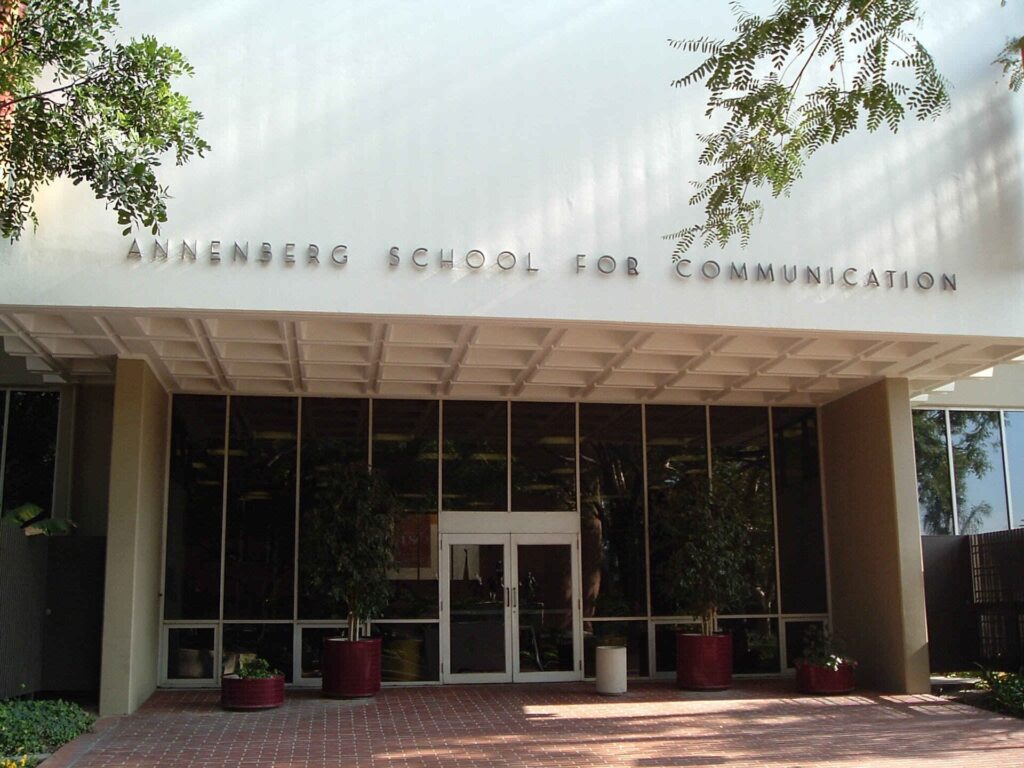
Why women hold just 6% of music production credits, according to USC Annenberg
An annual study of the Billboard Hot 100 charts reveals persistent barriers keeping women out of the studio. The data shows little change despite industry initiatives.

The women who work as producers and engineers on hit songs remain a tiny fraction of the industry. In 2024, just 5.9 percent of producing credits on the Billboard Hot 100 year-end chart went to women, down from a record 6.5 percent in 2023, according to the USC Annenberg Inclusion Initiative’s annual “Inclusion in the Recording Studio?” report.
The report, which has tracked gender and race in music production since 2012, shows the problem is both severe and stalled. Over the 13-year span studied, 93.3 percent of songs had no women producers. An earlier report found that across nine of the years studied, roughly 30 men worked as producers for every 1 woman. For women of color, the numbers are even more dire: only two of the 14 women producers credited on 2024’s Hot 100 were women of color.
How the study measures representation
The USC Annenberg Inclusion Initiative, led by researcher Stacy L. Smith and sponsored by Spotify, analyzes credits on the Billboard Hot 100 year-end charts each year. The study examined 13 years of data spanning 1,300 songs from the chart, looking at everyone credited as a producer, songwriter or featured artist. Researchers count each individual person credited in each role and break the data down by gender and race.
The study covers not just producers but songwriters and featured artists too, creating a fuller picture of women’s roles in popular music. In 2024, for instance, women made up 37.7 percent of artists on the year-end Hot 100, 18.9 percent of songwriters, and 5.9 percent of producers. The report also examines Grammy Award categories in major genres, broadening the scope beyond the Hot 100 alone.
By analyzing the same chart year after year, the study tracks momentum—whether gains for women are steady, slowing, or reversing. The methodology is straightforward: if a song credits multiple producers, each credit is counted separately. A song with two male producers and one female producer counts as a 33 percent female-produced song. This approach shows how female representation shifts as the music industry’s output changes.
Study scope and methodology
The USC Annenberg Inclusion Initiative examines the Billboard Hot 100 year-end charts each year, analyzing credits for women and people of color as artists, songwriters and producers across 13 years and 1,300 songs. The “Inclusion in the Recording Studio?” report has tracked these patterns since 2012 and is sponsored by Spotify. Each individual credit is counted separately, so a song with three producers contributes three credits to the total.
The producer shortage: a 13-year stall with recent setbacks
The percentage of women producers has barely budged over more than a decade. In 2012, women held 2.4 percent of producing credits on the Hot 100. By 2023, that had risen to 6.5 percent—a gain of 4.1 percentage points over 11 years. The 2024 figure of 5.9 percent represents a setback, with researchers noting that “the numbers for women songwriters and producers have been stubbornly resistant to change.”
The decline in 2024 is notable because it followed a record year. In 2023, 14 women received producing credits out of 215 total producers on the Hot 100 chart, with nearly half of those women producers being women of color—a relative bright spot. The drop to 5.9 percent in 2024 means fewer women broke into production roles than during 2023’s record year.
In absolute numbers, the numbers tell the story plainly. In 2024, only 14 women received producing credits across the entire Hot 100 year-end chart. Production is the bottleneck. Across all 13 years of the study, 93.3 percent of songs included zero women producers, a rate that has barely improved despite rhetoric about diversity.
What keeps women out of the studio
The barriers women face in music production are structural rather than individual. Gatekeeping—where established figures in A&R, programming and studio management control access to studio time and opportunities—remains male-dominated. Studios and production teams are often built on informal networks and mentorship relationships that historically excluded women. Young producers looking to break in find that the path typically runs through relationships rather than job postings: knowing the right person, being invited into sessions, having someone vouch for your skill.
Aspiring women producers struggle to find mentors and visible role models because so few women reach senior positions. Male-dominated studio environments, frequent microaggressions, and the perception of production as a “boys’ club” push some women away. Women working in studios report being questioned about their competence in ways male colleagues are not.
The technical side is also male-dominated. In the Musicians’ Census survey, just 2 percent of women musicians reported working as studio or mastering engineers, and 2 percent as live sound engineers—roles that often feed into production opportunities. Women entering these fields report facing microaggressions, underestimation and burnout from constantly having to prove themselves, which can push them toward other parts of the music industry.
The numbers for women songwriters and producers have been stubbornly resistant to change.
Initiatives with limited reach
The music industry has launched programs to address the shortage. The Recording Academy’s Women in the Mix pledge, introduced around 2020, asked artists and producers to work with at least one female producer or engineer on a song. Yet the 2020 study data showed the pledge had “not had a meaningful impact”: of 38 pledge-takers with songs on that year’s Hot 100, none recorded with a female producer. Only one pledge-taker—Ariana Grande—worked with a woman engineer (herself, on some of her own songs). The initiative did not shift the underlying dynamics of how producers are hired.
Other organizations like Be The Change, Keychange, She Is The Music, Spotify’s EQUAL and Women’s Audio Mission work to support talented women in songwriting and production. These groups provide mentorship, training and visibility for women pursuing production and engineering careers.
Yet despite their efforts and the talent available, industry hiring patterns have not shifted at the scale their work implies should be possible. The gap between the number of talented women and the number of women actually working as credited producers suggests the problem is not a shortage of talent but a shortage of opportunities, gatekeeping and mentorship.
The outlook for women of color
Women of color face compounded barriers in music production. The 2024 data showed only two women of color among the 14 women who received producing credits on Hot 100 songs—a ratio of 2 to 12 for white women—meaning 85.7 percent of women producers were white. This disparity reflects both gender bias and racial gatekeeping in studio access and hiring, as well as intersecting barriers that make breaking into production even harder for women of color.
Because the share of women producers has fluctuated—from a record 6.5 percent in 2023 to 5.9 percent in 2024—it is difficult to assess whether conditions are improving for women of color or simply shifting with small sample sizes. What is clear is that neither the percentage of women producers nor the percentage of those who are women of color has reached a level that would indicate structural change.
Related coverage: Women directed 13% of top-grossing films in 2025, down from 16% in 2024.
Photo: VACANT FEVER · CC BY-SA 2.0 · via Wikimedia Commons