
How Lara Worthington built OMMAGE as a founder-owned beauty label
Worthington launched OMMAGE on September 23 with full creative control—avoiding the celebrity licensing deals that limit founder upside and decision-making power.
Lara Worthington launched OMMAGE, a beauty brand she spent three years developing, on September 23, 2026—but not through a licensing deal. Instead, she is steering the brand as its founder, personally overseeing its creative direction—a model that contrasts sharply with how most celebrities enter the beauty industry.
The distinction matters financially and operationally. Founder ownership, where a creator holds equity in the company, builds long-term wealth and preserves decision-making authority. Celebrity licensing—where a brand rents a name for royalties of 3 to 10 percent of revenue—trades that upside for safety and minimal involvement. As the beauty industry has matured, more founders are choosing ownership over licensing, and Worthington’s path reflects that shift. In June 2025, Huda Kattan bought back a minority stake held by private equity firm TSG Consumer Partners, making Huda Beauty fully founder-owned once again. That move signals how founder-led brands increasingly prioritize control over the financial backing that licensing partnerships or private equity offers.
A founder-led debut with creative control
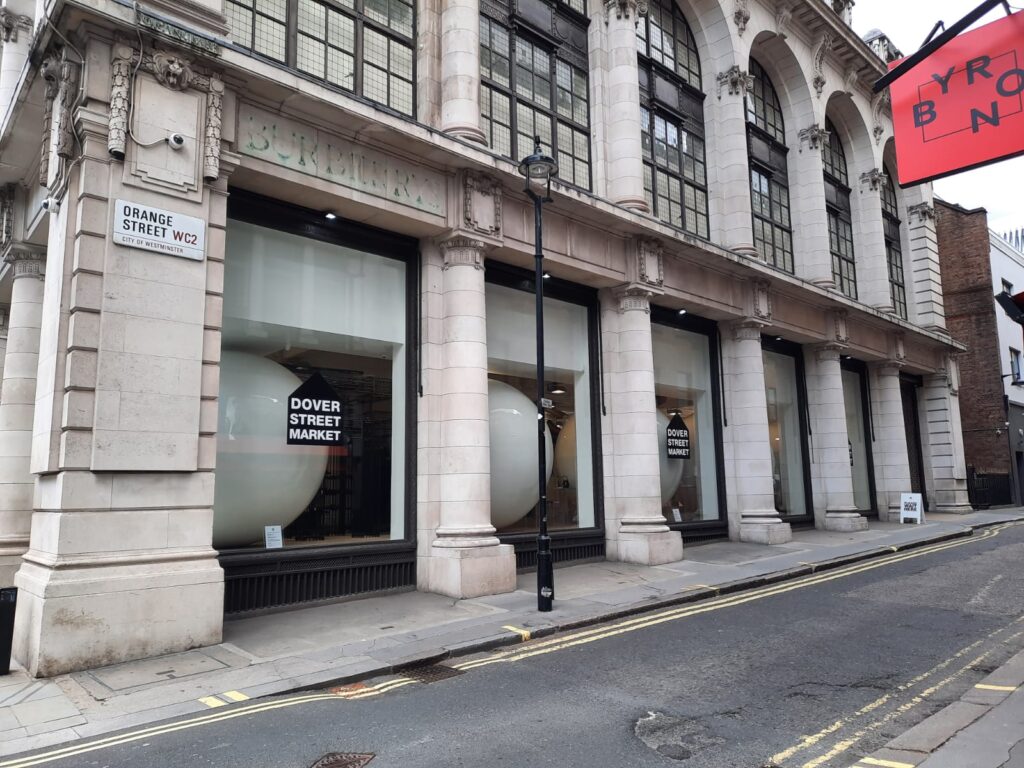
OMMAGE launches with three products: a tinted base in 12 shades called First Base, a soft-focus lipstick called Lip Coat, and a Buffer Brush for application. All formulas are vegan and cruelty-free. The brand is available via OMMAGE.com in Australia and the US, and its products are stocked at Dover Street Parfums Market in Paris, with a launch event held at Climax Books in New York.
Worthington describes her philosophy as formulas that “accentuate features, rather than mask or correct,” emphasizing tactile design and products meant to feel respected as objects rather than disposable. She worked with collaborators including product formulator Victoria Baron and designer Brian Rotinger, but positioned herself as the creative guide: “it’s like a soccer team—you always need to pass the ball. You cannot do it by yourself; you need to collaborate.” Still, her collaborators are clear about her authority: “You’ve been really focused and clear on what you want, Lara – you really are steering the ship,” Baron told her in their joint interview.
The three-year development timeline reflects her hands-on approach. Rather than licensing her name to an established beauty manufacturer—the model that typically generates fast revenue—Worthington invested years refining formulas, testing packaging, and building distribution partnerships. That investment of time upfront is characteristic of founder ownership: the creator absorbs the risk and opportunity cost, but retains the ability to shape every aspect of the brand’s identity and business model.
OMMAGE launch and distribution
OMMAGE launched September 23, 2026, with products available at OMMAGE.com in Australia and the US and at Dover Street Parfums Market in Paris, alongside a launch event at Climax Books in New York. The initial collection includes First Base (tinted base in 12 shades), Lip Coat (soft-focus lipstick), and Buffer Brush. All formulas are vegan and cruelty-free.
Self-funding as a founder template
Worthington established her founder-led approach a decade earlier. In 2014, following a personal transition, she self-funded a beauty line called The Base, initially focused on tanning and makeup. The brand developed a devoted customer base. Rather than pursue licensing partnerships or sell equity to outside investors, Worthington later converted The Base into a nonprofit called Share The Base, donating 100 percent of proceeds to three Australian charities: WWF Australia, the Humpty Dumpty Foundation, and Bowel Cancer Australia.
That decision—to retain control and redirect profits to causes she valued—demonstrates her preference for founder ownership over the licensing model. She described the shift as delivering “a million more times” fulfillment than maintaining profits for herself. The choice also shows a pattern: Worthington builds brands she owns and controls, rather than renting her name to manufacturers in exchange for royalties.
Beyond The Base, Worthington has also partnered with established brands including the clean skincare line Emma Lewisham, the supplement company Swisse, and the Australian clothing brand Atoìr. These partnerships sit alongside her founder-led ventures, giving her experience with both models. OMMAGE represents her return to founder-led beauty after more than a decade of building other businesses and managing her modeling and media career. She is now 39 and bringing the accumulated experience from all those ventures to bear.
The economics of founder ownership versus celebrity licensing
The beauty industry has long relied on celebrity licensing: a brand pays a celebrity for the right to use their name, handles product development and distribution itself, and pays the celebrity royalties (typically 3 to 10 percent of revenue) while the celebrity has limited control over decisions. The model is low-risk for the celebrity and requires minimal time commitment. But it builds no ownership stake. If the brand succeeds, the creator’s upside is capped at the royalty stream negotiated at launch—often before the brand’s true market potential is known.
Founder ownership—where the creator holds equity in the company—carries higher financial risk and demands greater operational involvement. In return, the founder’s wealth and the company’s success move together. Rihanna’s 50 percent stake in Fenty Beauty is valued at $1 billion to $1.5 billion. Fenty Beauty generated more than $600 million in revenue in 2023, and Rihanna captures the owner’s share of those profits and growth. Selena Gomez holds a majority stake widely reported at approximately 51 percent in Rare Beauty, which was valued at approximately $2.7 billion as of late 2025; Bloomberg reported in September 2024 that roughly 81 percent of her then-estimated $1.3 billion net worth—about $1.05 billion—came from her Rare Beauty stake. Rare Beauty generated an estimated $350 million in annual revenue, according to a 2024 report.
Jessica Simpson’s licensing deal illustrates the alternative: Simpson collected substantial annual income from royalties but produced no owned assets when the brand succeeded. As the industry has shifted, even founders who initially took licensing deals have begun moving toward ownership. In June 2025, Huda Kattan, founder of Huda Beauty, bought back the minority stake held by private equity firm TSG Consumer Partners. Huda Beauty is now fully founder-owned.
Worthington’s choice to retain creative and financial control in OMMAGE positions her to capture upside if the brand grows—and to absorb risk if it doesn’t. That trade-off—trading the safety of predictable royalties for the possibility of larger returns—is the core distinction between founder ownership and celebrity licensing.
Rather than licensing her name to an established manufacturer, Worthington invested years refining formulas, testing packaging, and building distribution partnerships.
Strategic delegation and operational control
Founder ownership does not require the founder to operate the business alone. Selena Gomez’s model demonstrates how strategic delegation works within an ownership framework. Gomez founded Rare Beauty and announced it in February 2020, launching seven months later. Rather than operating the company herself, she brought in experienced leadership: Scott Friedman, who built NYX Cosmetics before its $500 million acquisition by L’Oréal in 2014, as CEO, alongside NYX veterans Joyce Kim and Mehdi in senior strategic roles.
This approach allowed Gomez to focus on her core contribution—her story, her audience, and her willingness to be publicly vulnerable about mental health—while experienced operators managed day-to-day business and strategy. She maintained majority ownership (approximately 51 percent) while letting specialists execute, demonstrating that founder ownership is compatible with hiring experienced teams. The distinction from licensing is that Gomez retains decision-making authority and the economic upside, even as she delegates operational execution.
Worthington has shown a similar pragmatism, working with collaborators on OMMAGE including formulator Victoria Baron and designer Brian Rotinger. The indication from her interviews is that she retains creative direction while relying on specialists for product development and design execution. That model—founder in charge of vision and strategy, specialists handling execution—has become increasingly common among founder-owned beauty brands.
The wider celebrity beauty market
The wider celebrity beauty market continues to expand. Celebrity brands grew 4.1% in 2024, and health and beauty licensing grew 6.3%, according to the Licensing International Global Licensing Industry Survey; the industry overall was 40% larger in 2023 than in 2019.
Fragrance is a particular bright spot: a Piper Sandler survey found Gen Z’s core beauty spending reached $342 a year, up 6 percent year-over-year, with fragrance the fastest-growing category at 25 percent. Beauty brands also account for 7 of the top 10 most successful celebrity-owned businesses globally, according to a recent analysis by packaging firm Arka.
Photo: SpeedyCheetah66 · CC BY-SA 4.0 · via Wikimedia Commons